House Painting Kirkland: What Lake Washington Humidity Does to Cedar Siding
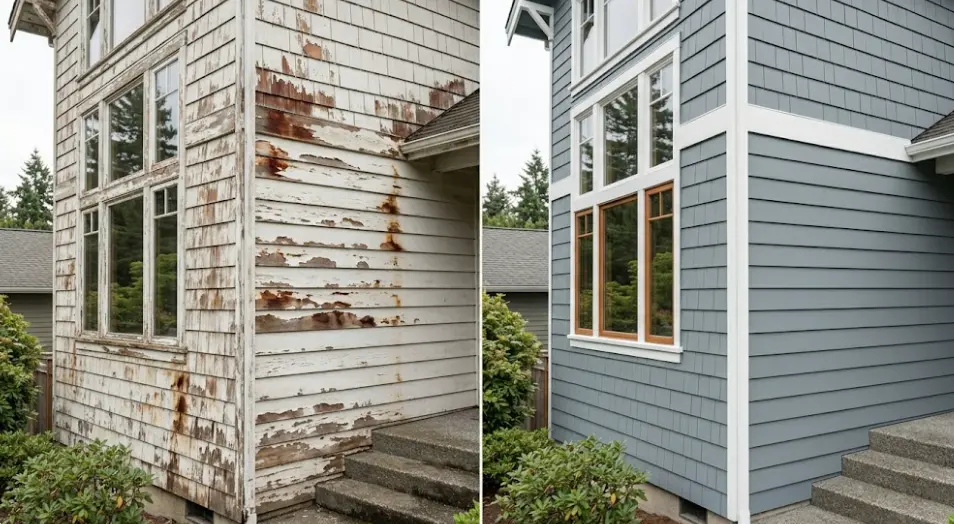
Tom and Angela Reid bought their Juanita craftsman in 2014. It had cedar lap siding that had been last painted around 2010, and by 2019 it was starting to chalk and fade — normal Pacific Northwest wear after nine years. They hired a local painter who pressure-washed, applied a latex primer, and rolled two coats of premium exterior latex. The work looked excellent. By the following September, barely eighteen months later, the south and west elevations were peeling in sheets.
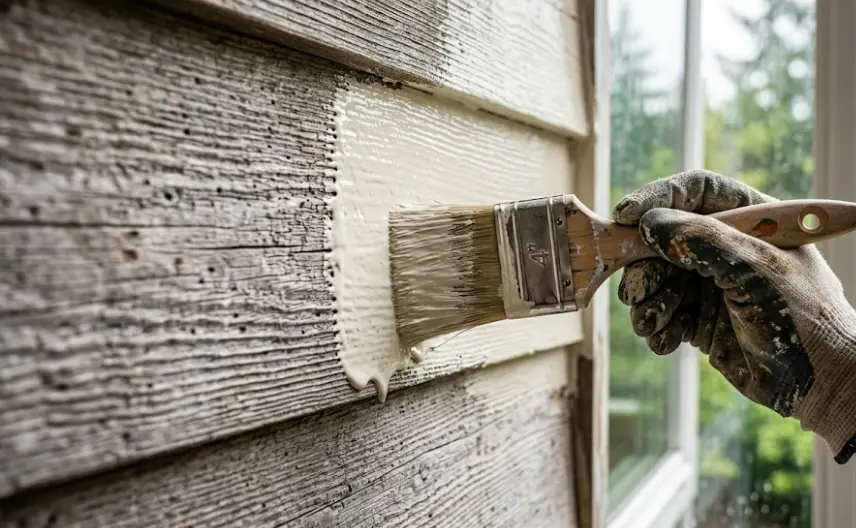
The diagnosis when I looked at it: the painter had used the wrong primer for weathered cedar. Cedar contains water-soluble tannins that bleed through latex-based primers, especially on weathered wood where the surface grain is open. The tannin bleed breaks the bond between primer and topcoat over the first heating cycle. Add Lake Washington's prevailing southwest winds driving moisture into the west elevation from April through October, and the failure timeline accelerates. The solution isn't more expensive paint — it's an oil-based or shellac primer on the first coat, blocking the tannins before any latex touches the wood. Every dollar the Reids spent in 2019 got stripped off and done again correctly in 2021.
60%+ of pre-1990 Kirkland homes have cedar siding
Requires oil-based primer — not what most crews carry by defaultLake proximity adds 8–12% humidity vs inland Eastside
Affects dry times, primer adhesion, and topcoat cure window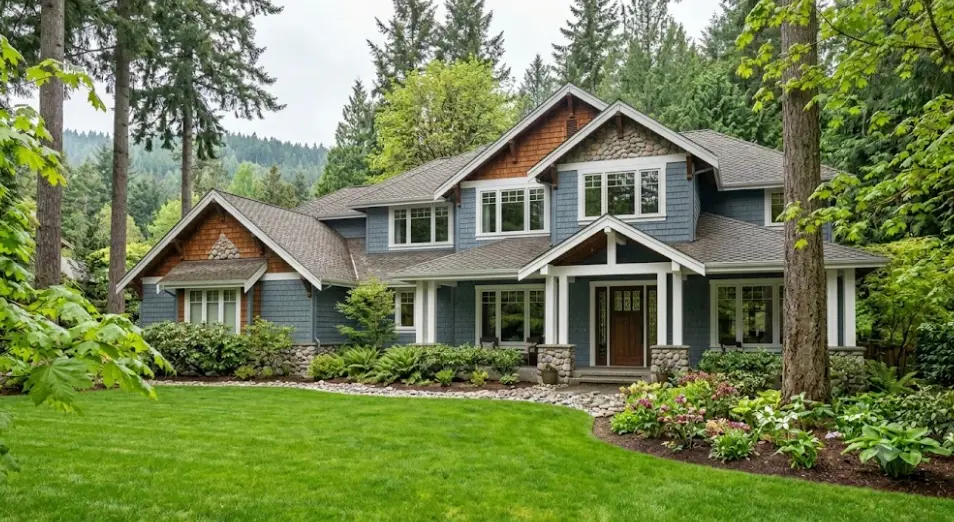
What Kirkland's Housing Stock Demands From a Painter
Fifteen years on the Eastside teaches you what the specs don't say
Cedar Siding: The Primer Problem
Western red cedar was the default siding material for Eastside new construction from roughly 1955 through 1990. It's in most of the craftsman and ranch-style homes in Juanita, Houghton, and downtown Kirkland. Cedar is a beautiful siding material with one significant chemical complication: it contains extractable tannins and oils that migrate to the surface when moisture hits freshly applied latex primer. The result looks like rust-colored bleed-through, and it doesn't just stain — it actively prevents adhesion between primer and topcoat.
The correct approach depends on the condition of the wood. Fresh, stable cedar (or a cedar that was last primed with oil-based products) can be reprimed with a high-quality latex primer-sealer in dry conditions. Weathered cedar — anything that's been chalking, checking, or sitting bare for more than a few seasons — needs an oil-based primer or a shellac-based product like Zinsser BIN on the first coat. I bring both on Kirkland jobs and decide at the site based on what I see when I cut into the chalk layer with a fingernail.
About forty percent of the peeling failures I'm called to diagnose in Kirkland trace back to latex-over-weathered-cedar primer selection. The other common cause is inadequate surface prep before repriming — painting over chalky, poorly bonded old paint without stripping back to sound material.
The Lake Washington Humidity Window
Kirkland sits on the eastern shore of Lake Washington, and the lake has a measurable microclimate effect. Evaporation off the water keeps relative humidity in the immediately adjacent neighborhoods — downtown Kirkland, Houghton, the lower parts of Juanita — higher than comparable locations inland. In spring and fall, this humidity lingers into the mid-morning even on days that look dry. I've pulled out a moisture meter on a Kirkland exterior at 10 AM on an apparent clear day and read 78% relative humidity off the clapboards.
Exterior paint needs ambient humidity below 85% and surface temperature above 50°F to cure properly. Both conditions are consistently met in Kirkland only in June, July, and August — and even then, early-morning starts on lake-facing elevations need to wait until the surface dries. I schedule Kirkland exterior jobs to start no earlier than 9:30–10 AM and plan the day's work starting on the shaded elevations (usually north and east) while the lake-side elevations dry, then moving to the south and west after 11.
Most homeowners don't know this affects anything. They just know that the paint on the west side of their house always goes first. It's not inferior paint — it's that the west elevation sees the most moisture from Lake Washington's prevailing weather patterns and gets the most direct afternoon heat cycling on top of that moisture.
The Kirkland Aesthetic Standard
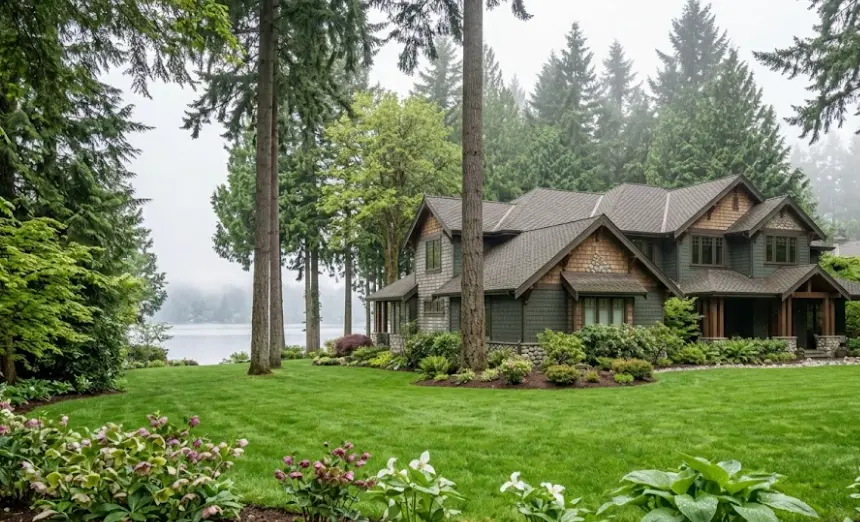
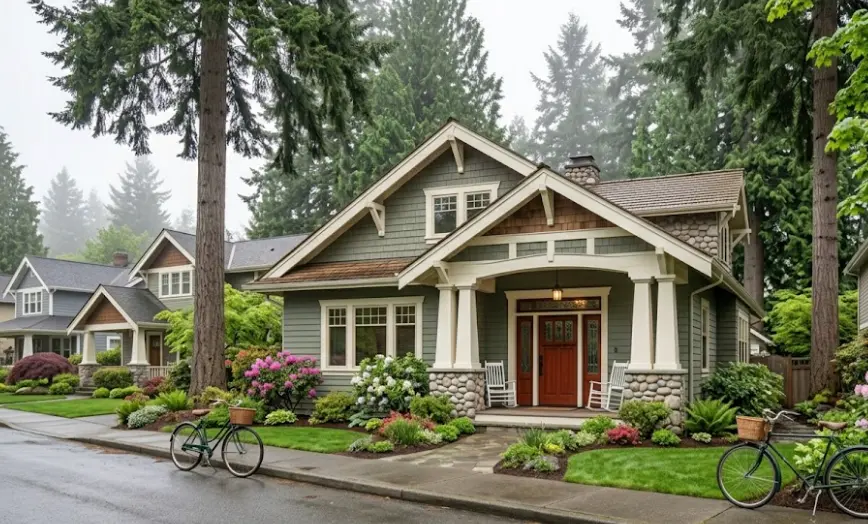
Kirkland has a specific visual identity that homeowners here either already know or pick up quickly: the houses are well-maintained, the trim is crisp, and the color palette leans toward the considered rather than the generic. You see a lot of muted Craftsman greens and blues, warm whites with contrasting window trim, and occasional bold choices on Victorians near the waterfront. What you almost never see in established Kirkland neighborhoods is the builder-beige that dominates newer Eastside construction.
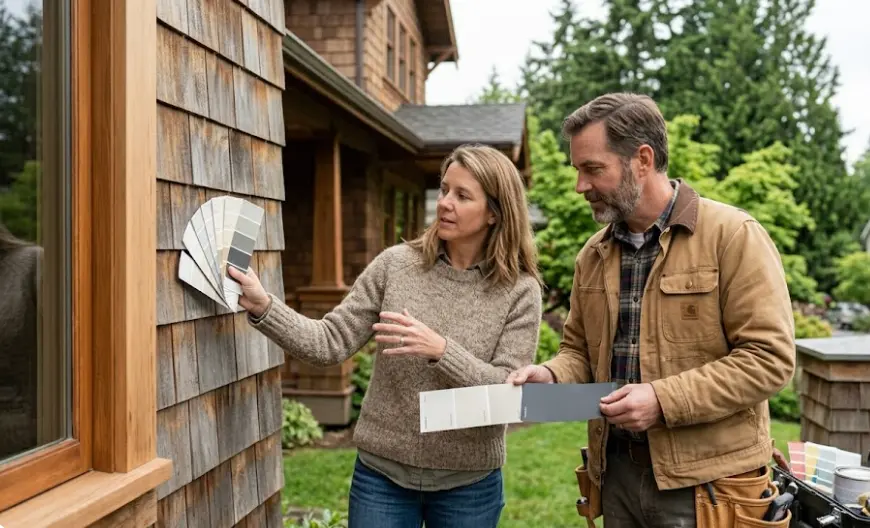
This matters practically because it affects color consultation. When I work with Kirkland homeowners on color selection, the conversation is almost always about how the house sits in its immediate context — the neighboring homes, the mature trees, the specific quality of light coming off the lake in the afternoon. A color that looks perfect on a sample card can read too saturated against the muted Pacific Northwest sky, or too cool against the warm cedar tones of mature Douglas fir landscaping. I take a sample chip to the exterior and look at it at 9 AM and at 3 PM before I'd ever sign off on it for a full project.
The homes that turn heads in Kirkland are almost always in the mid-range of saturation: not stark white, not deep charcoal, but something that references the natural tones of the neighborhood — the lake, the evergreens, the stone — and adds one considered accent at the trim or front door. The Andersons on 84th Ave NE went with a Benjamin Moore Smoky Mountain blue-gray for the body and a crisp Chantilly Lace at the trim. Every neighbor within three houses stopped to ask about it before we were finished.
Interior House Painting in Kirkland
What changes when you're painting inside a Pacific Northwest home
Humidity and Sheen Selection
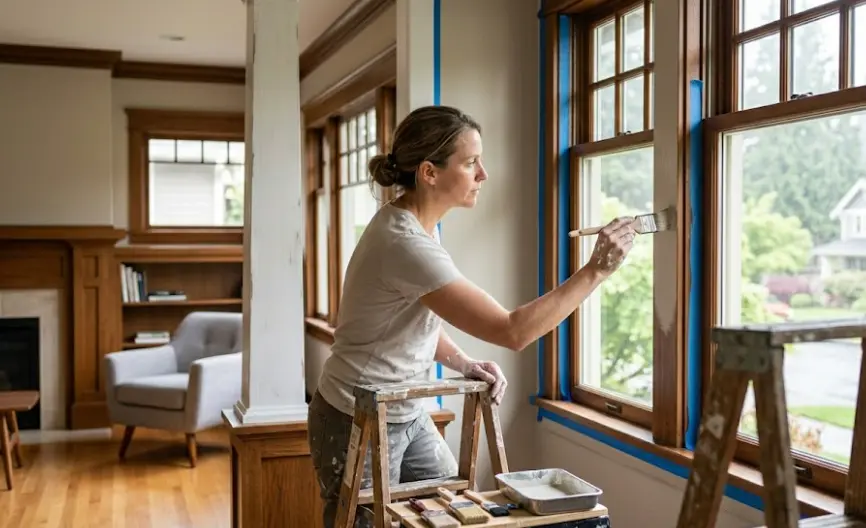
The interior humidity dynamics in Kirkland homes are different from what you'd find in an arid climate, and sheen selection matters more here. Flat and matte finishes are unforgiving in high-moisture areas — kitchens, bathrooms, and mudrooms in lake-area homes deal with condensation that flat paint can't shed cleanly. I default to eggshell for walls throughout most Kirkland homes and satin or semi-gloss for trim, with satin also going on any wall in bathrooms and kitchens.
The older craftsman homes near downtown have plaster walls in the original rooms and drywall in later additions. The two surfaces respond to paint differently — plaster absorbs slightly differently, shows imperfections differently, and needs a different wall prep approach. The transition areas, where plaster meets drywall addition, are the places most likely to show differential sheen or texture under natural light if not addressed carefully in prep.
The Older Home Prep Reality
Pre-1975 Kirkland homes — and there are a lot of them in the flats between downtown and Juanita — frequently have lead-containing paint in older layers. Washington State requires lead-safe work practices (RRP certification) for any project that disturbs more than six square feet of painted surface in a pre-1978 home. I'm RRP certified and carry the documentation. Any contractor working in these homes who doesn't mention lead-safe practices is either unaware of the requirement or choosing to ignore it. Neither is a comfortable situation for the homeowner.
Plaster Wall Repair
Original plaster in 1950s–70s Kirkland homes cracks differently than drywall. Hair cracks respond to a flexible skim coat. Delaminating plaster needs to be re-anchored or replaced before any painting starts. I include a wall assessment in every interior estimate — surprises after the paint is on are expensive for everyone.
Trim and Millwork
Kirkland craftsmans have original fir trim, often with multiple paint buildup layers. Stripping to bare wood and repriming gives a finish that looks custom rather than painted-over. When full stripping isn't practical, I sand to a sound surface and spot-prime all bare areas before the finish coat — not the shortcut of rolling trim without hand-brushing the detail profiles.
RRP Lead-Safe Compliance
Pre-1978 homes in Kirkland require EPA RRP certified contractors. I'm certified, carry the paperwork, and use proper containment and HEPA vacuum procedures. Required by law — not optional. Ask any contractor you interview whether they're RRP certified for pre-1978 homes.
Kirkland Neighborhoods: What the Houses Actually Look Like
Local knowledge built job by job over fifteen years
Kirkland's Highest-Visibility Homes
The homes within a half-mile of the downtown core and marina are the most scrutinized in the city. Neighbors notice everything here, the homes are close together, and the aesthetic standard is high. Most of these are 1940s–1960s original construction — many have been updated but retain original cedar siding and wood-framed windows. The paint on these houses isn't just maintenance; it's a significant aesthetic and resale value decision.
The color vocabulary in this part of Kirkland runs toward historical authenticity: Benjamin Moore HC-series, Farrow & Ball equivalents, muted naturalistic hues. I've never had a downtown Kirkland client who wanted safety-orange trim. What they almost always want is something that looks like it belongs — which in practice means researching the original color for their era of construction, or working with adjacent structures to understand what reads as cohesive at street scale.
The Palmer family on Lake St restored their 1952 Craftsman to a period-appropriate palette — Craftsman green body with cream trim and a burgundy front door. Three neighbors asked for the color specs within a week of completion.
Cedar Siding Central
Juanita has the highest concentration of cedar-sided 1970s–1980s homes in Kirkland — the period when cedar was still the default and construction quality was generally good. These houses were built to last, and most of them have lasted. The painting challenge in Juanita is almost always the same: a house that was last painted 10–15 years ago, cedar that's chalking and slightly checking, and a previous primer selection that was wrong for weathered wood.
I've done full exterior repaints on probably thirty Juanita homes over the years. The consistent issue is the west and south elevations, which face into Lake Washington weather and see the most moisture-heat cycling. Stripping back to sound paint on these elevations, spot-priming bare cedar with oil-based primer, then repriming everything with a quality latex primer-sealer before the finish coats — this is the process that lasts. The shortcut of painting over chalky surfaces lasts three to five years; the full process lasts twelve to fifteen.
Large Homes, Longer Painting Days
Bridle Trails and Rose Hill have Kirkland's largest homes — 3,000–5,500 sq ft two-stories on larger lots, mostly 1980s–2000s construction. The siding mix here is more varied: T-111 plywood on older structures, Hardie fiber cement on 2000s+ builds, and some cedar on 1980s originals. Each substrate has different prep requirements and different paint specifications. Fiber cement takes Sherwin-Williams Resilience or Duration extremely well; T-111 needs the same cedar tannin precautions as solid cedar.
The size of these homes means a full exterior repaint is a 4–6 day project with a proper crew. I've found that larger Bridle Trails homes are best approached in phases by elevation — complete one side fully (prep, prime, topcoat) before moving to the next, so no elevation sits primed without its topcoat overnight if weather turns.
Elevated, Wind-Exposed Homes
Finn Hill and Kingsgate sit on elevated terrain above Juanita, with exposure to the Puget Sound convergence zone weather that can bring rain at the hill even while downtown Kirkland is dry. Homes here deal with more wind-driven rain on north and west elevations, which accelerates paint wear faster than lower-elevation counterparts. The specific challenge I see on Finn Hill is failing caulk at window and door penetrations — wind-driven rain gets behind failed caulk and wicks into the wall cavity, which means water damage under paint that looks intact from the outside.
On every Finn Hill exterior job, I probe all caulk joints with a putty knife before starting any painting. Failed caulk gets removed and replaced before primer goes down. It's not a painting task, but it's what determines whether the painting work holds. I've found active moisture intrusion behind intact-looking paint on Finn Hill homes more than anywhere else in the city.
Color Choices That Work in Kirkland
What I've seen succeed and fail on Eastside homes over fifteen years
I'm not a color consultant and I don't pretend to be — color choice is the homeowner's decision and I respect that. But I've painted enough Kirkland homes to have pattern-matched what works in this environment versus what looks off, and I share that honestly when clients ask.
The Pacific Northwest sky is diffuse and cool for nine months of the year. Colors that look warm and inviting in California showrooms read as cold and gray here under overcast skies. Kirkland's specific situation adds a blue-green color cast from the lake that shows up in afternoon light on lake-facing elevations. This means colors with slightly warmer undertones than you'd expect work better than their chip suggests.
The most consistently successful exterior color families I've seen on Kirkland homes:
Muted Craftsman Greens
HC-124 range, earthy sage. References evergreen backdrop, reads as natural against cedar.
Lake Blues & Grays
Blue-gray range (SW Oyster Bay, BM Smoky Mountain). Works year-round, complements trim white.
Warm Creams & Taupes
BM Navajo White, SW Antique White. Warmer than expected on overcast days. Ages well.
Deep Navies & Charcoals
High contrast with white trim. Dramatic but needs quality prep — dark colors telegraph every surface flaw.
One thing I caution against: Pure bright white on exterior siding in Kirkland. It reads clean in summer but shows green algae staining within 3–4 years from the lake humidity and organic debris. Off-whites and creams stay looking intentional much longer.
How a Kirkland House Painting Project Works
Exterior and interior — the actual sequence, not the sales pitch
Site Assessment: What You're Actually Starting With
I walk the exterior with a putty knife, moisture meter, and chalk test kit. Chalk test: press tape to the surface, pull it — how much paint transfers tells me whether I'm painting over sound material or over a layer that'll fail. Moisture meter: any reading above 15% on wood siding means the surface needs to dry before painting, regardless of how dry it looks. Putty knife: I probe every caulk joint, every bottom course of siding, and every window and door penetration. Failed caulk is the primary cause of paint failure on Kirkland homes.
I also identify the siding type and previous primer spec if possible. Cedar over oil-based primer is treated very differently from cedar over failed latex. This takes forty-five minutes to an hour on a typical Kirkland exterior and determines every subsequent decision.
Prep: The Step That Determines the Life of the Job
Pressure washing at appropriate pressure (too high damages cedar grain), drying time (24–48 hours in Kirkland conditions before primer), scraping all loose paint back to solid substrate, hand-sanding feathered edges so the transition between bare wood and old paint isn't visible through the finish coats, replacing failed caulk at all penetrations with a paintable polyurethane or siliconized acrylic rated for wood movement.
Prep on a standard Kirkland exterior takes one full day for a crew of two on a 1,800 sq ft home. Contractors who skip this — who wash and prime the same day, or who paint over obviously failing surfaces — are making your problem temporary. The paint covers it. It fails in three years instead of twelve.
Primer Selection and First Coat
Fresh stable wood or previously oil-primed cedar in good condition: high-quality latex primer-sealer (Sherwin-Williams Extreme Bond, Benjamin Moore Fresh Start). Weathered cedar or bare cedar with visible checking or checking: oil-based primer or shellac primer on bare wood areas, latex primer-sealer over the sound painted areas. Fiber cement (Bridle Trails newer homes): I follow the Hardie spec sheet — their product warranty depends on specific primer and topcoat application methods, and I've read it.
Primer goes on the day after prep is complete and the surfaces are confirmed dry. I don't start painting at 7 AM in Kirkland — lake humidity needs to burn off first. My standard start for priming lake-adjacent elevations is 10 AM minimum.
Topcoat: Two Coats, Proper Dry Time Between
Sherwin-Williams Duration and Resilience, Benjamin Moore Aura Exterior, or PPG Timeless — these are the three exterior products I use on Kirkland homes. All are self-priming with good topcoat adhesion, flexible enough to handle the Pacific Northwest thermal cycling, and mildew-resistant. I apply by brush and back-roll on cedar (brush gets paint into the grain, roller leaves a stipple that prevents runs), spray-and-back-roll on smooth fiber cement.
Two coats with a minimum of four hours dry time in summer or overnight in spring and fall. The second coat goes on only when the first coat is dry to the touch and dimensionally stable — pressing a fingertip into it shouldn't leave any mark. Rushing the second coat in humid conditions causes intercoat adhesion failure that shows up as peeling three years in.
Trim, Doors, and Final Detail
Trim gets brush-applied — I don't roll trim on quality work. The cut-in lines at window trim, fascia, and corner boards are what the eye goes to first on a finished house. I mask adjacent surfaces, apply by brush with a quality 2.5" angle sash brush, and pull the masking while the paint is still slightly wet to get a clean edge without hard tape lines. Front doors get special attention: full sanding, spot-prime any bare wood, and two brush coats in a trim formula for better durability and a smoother finish than wall paint provides.
Four Kirkland Houses, Four Different Scopes
Real projects — specific decisions and outcomes
The Juanwood Cedar Repaint
Location: Juanita (1977 cedar lap) • Cost: $5,800
Tom and Angela Reid's house — the one from the opening. After stripping the failed latex repaint from 2019, I took the west and south elevations back to bare cedar on the deteriorated sections, applied Zinsser BIN shellac primer to bare cedar, then latex primer-sealer over all sound sections. Two coats Benjamin Moore Aura Exterior in Smoky Mountain. That was three years ago. The west elevation looks the same as day one.
"We spent $4,400 in 2019 and it started peeling in eighteen months. We spent $5,800 in 2021 and three rainy Kirkland winters later the paint looks the same as the day it went on. I wish I'd asked Antonio about the primer question before the first job." — Tom Reid, Juanita
The Lake Street Craftsman Restoration
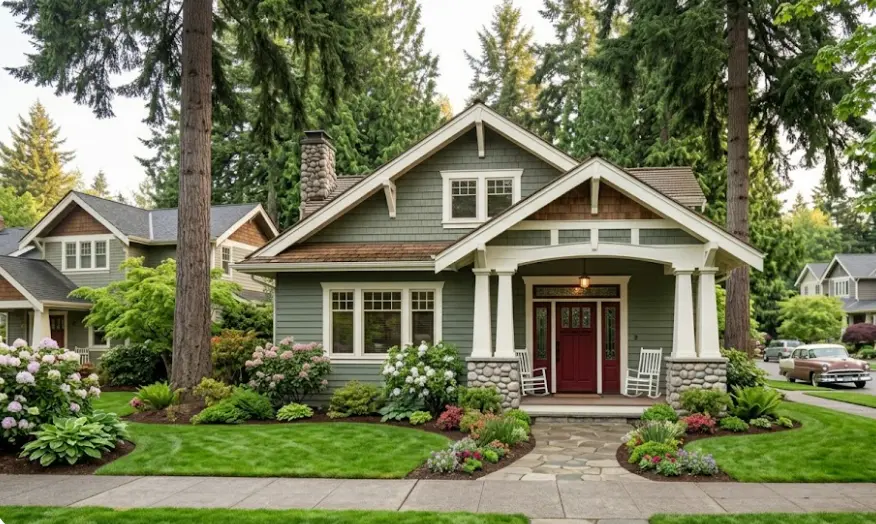
Location: Downtown Kirkland (1952 Craftsman) • Cost: $7,200
The Palmer family wanted the house to look the way it would have looked when built. I researched period-appropriate color palettes for 1950s Pacific Northwest craftsmans, presented three options, and they chose a Benjamin Moore HC-124 (Cromwell Gray-Green) body with Chantilly Lace trim and a Benjamin Moore Caliente red front door. Original fir trim was hand-stripped and refinished. The house has been on three neighborhood historical tour maps since completion.
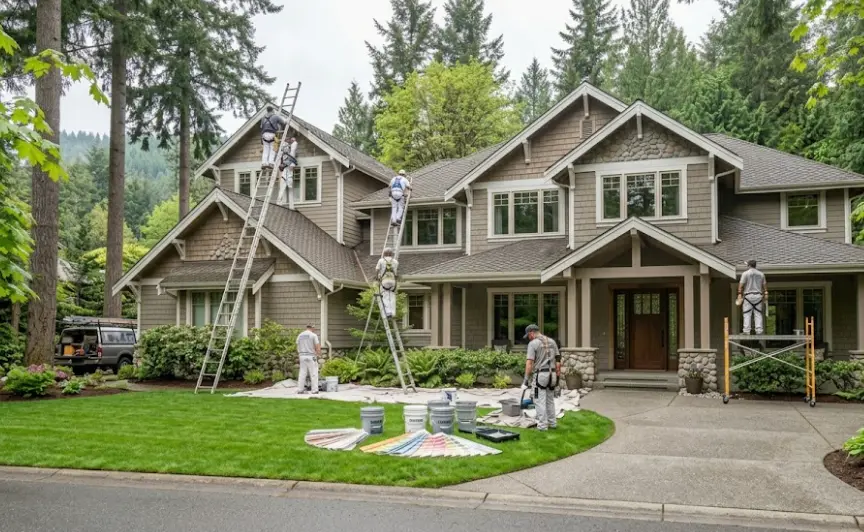
Bridle Trails: 4,200 sq ft Fiber Cement
Location: Bridle Trails (2002 Hardie) • Cost: $8,900
A 4,200 sq ft two-story with Hardie plank throughout. The previous repaint had used the wrong primer for fiber cement (a wood primer, not a masonry/FC-spec product) and was showing intercoat adhesion failure in the seam areas. I stripped the failing sections, applied Sherwin-Williams Exterior Bonding Primer per the Hardie specification, and used Resilience topcoat, which is in the Hardie approved product list. Four days with a crew of three. The Hardies have a 30-year warranty that requires specific paint products — I keep that spec sheet in the truck.
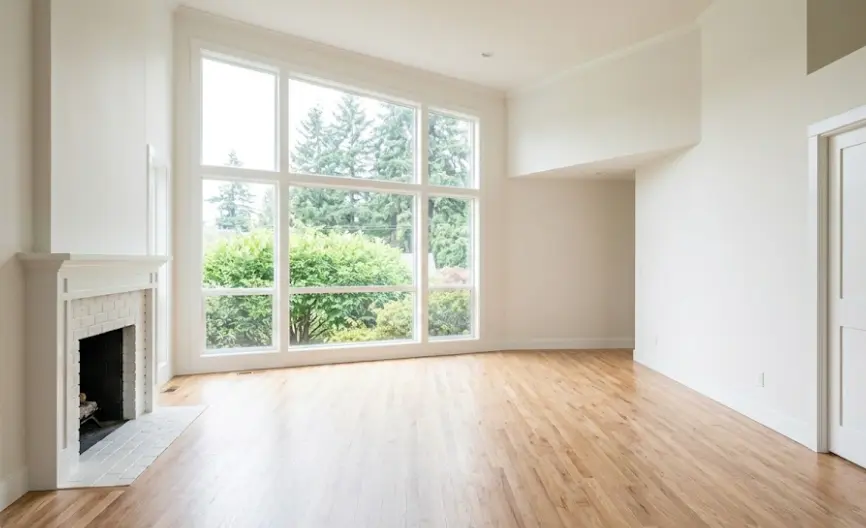
The Full Interior Repaint Before Sale
Location: Rose Hill (1968 ranch) • Cost: $4,100
The Chen family was listing their 1968 ranch after 22 years of ownership. Original plaster walls throughout the main living areas, drywall in the 1990s addition at the back. The plaster had hairline settlement cracks in three rooms; the drywall addition had visible joint lines from builder-grade thin finishing. I skim-coated the plaster cracks with setting compound, addressed the drywall joints, primed everything, and applied two coats of Aura Interior in a consistent warm white throughout. Their realtor said it was the best pre-sale prep she'd seen in three years.
What House Painting Costs in Kirkland
Range pricing by scope — exact quotes require an on-site walk
Small Exterior
- ✓ Up to 1,200 sq ft
- ✓ Full prep included
- ✓ Oil primer where needed
- ✓ 2 topcoats, caulking
Standard Exterior
- ✓ 1,200–2,000 sq ft
- ✓ Cedar tannin assessment
- ✓ All caulk replaced
- ✓ Trim detail by brush
Large Exterior
- ✓ 2,000+ sq ft, two-story
- ✓ Hardie/FC spec compliance
- ✓ Scaffolding included
- ✓ 5-year workmanship warranty
Interior Full Home
- ✓ Walls, ceilings, trim
- ✓ Plaster crack repair
- ✓ RRP lead-safe (pre-1978)
- ✓ 2 coats walls, 2 coats trim
Why I Quote On-Site, Not Over the Phone
Cedar condition, previous primer type, caulk status, and surface soundness vary enough between Kirkland homes that phone pricing isn't honest. A house that looks straightforward from the street can have failing caulk at every window and three elevations of chalking paint that need stripping — that's a $2,000 swing in labor. I give firm written quotes after a 30-minute walkthrough, always free.
What Kirkland Homeowners Say
Results that hold through Pacific Northwest winters
"We had our cedar-sided house painted in 2019 by another contractor and it started peeling in 18 months. Antonio explained exactly why — the wrong primer for weathered cedar. His repaint in 2021 has survived three full rainy seasons without a single issue. I've recommended him to four neighbors, all of whom had the same experience."
— Tom Reid
Juanita • Cedar exterior repaint • $5,800"We wanted our 1952 craftsman to look the way it should — not flipped, not modernized. Antonio came back with period-color research I hadn't seen anywhere else and walked us through three options that would have been authentic for the era and the neighborhood. The result is exactly what we wanted. The house belongs to its street again."
— Susan and David Palmer
Downtown Kirkland • Craftsman restoration • $7,200"He was the only contractor who mentioned the Hardie warranty specification. Everyone else was going to use whatever primer they normally use. Antonio pulled out the actual spec sheet and explained that the wrong primer voids the siding warranty. That's fifteen minutes of homework that saved us from a voided warranty on a $35,000 siding investment."
— Mark and Jennifer Holloway
Bridle Trails • Fiber cement repaint • $8,900"Our 1968 ranch needed a full interior repaint before we listed it. Antonio addressed the plaster cracks, the visible drywall joints in the addition, and matched the sheen consistently throughout rooms with different surface types. Our realtor specifically mentioned the interior condition as a selling point. We accepted an offer in nine days."
— Linda Chen
Rose Hill • Pre-sale interior repaint • $4,100What Every Kirkland Job Includes
Written commitments, not verbal assurances
5-Year Workmanship Warranty
Any adhesion or application failure within five years and I repaint it. Written in the contract, not a verbal promise.
Written Specification
Every quote includes the specific primer, topcoat product, number of coats, and prep scope. What I write is what gets done.
Licensed, Insured, RRP
Washington State contractor license, full liability and workers' comp insurance, EPA RRP certification for pre-1978 homes. All available on request.
Cedar & Caulk Assessment
Every exterior estimate includes a cedar substrate and caulk inspection. Surprises after the job starts cost everyone — I find them first.
More Kirkland and Eastside Services
Complete painting solutions across the region
Exterior Painting Kirkland
Dedicated exterior painting in Kirkland — cedar, fiber cement, and Hardie specialists.
Interior Painting Kirkland
Full interior painting in Kirkland — plaster, drywall, trim, and pre-sale prep.
Patching Kirkland
Expert patching and drywall repair in Kirkland before interior painting.
Ready to Paint Your Kirkland Home Right?
Cedar siding, Lake Washington humidity, and forty years of Pacific Northwest weather are a specific combination that most painters don't think about until something fails. I've been working in Kirkland long enough to know the substrate, the climate pattern, and the aesthetic standards of each neighborhood. I'll walk your property, test the surfaces, check the caulk, and give you a written quote that spells out exactly what's getting done — primer, product, coat count, warranty. No phone estimates on houses I haven't seen.
All Kirkland Neighborhoods
Downtown, Juanita, Bridle Trails, Rose Hill, Finn Hill, Kingsgate5-Year Written Warranty
Cedar substrate assessment and caulk inspection included freeOr call directly:
