Who Are the Best Professional Painters in Seattle, WA?
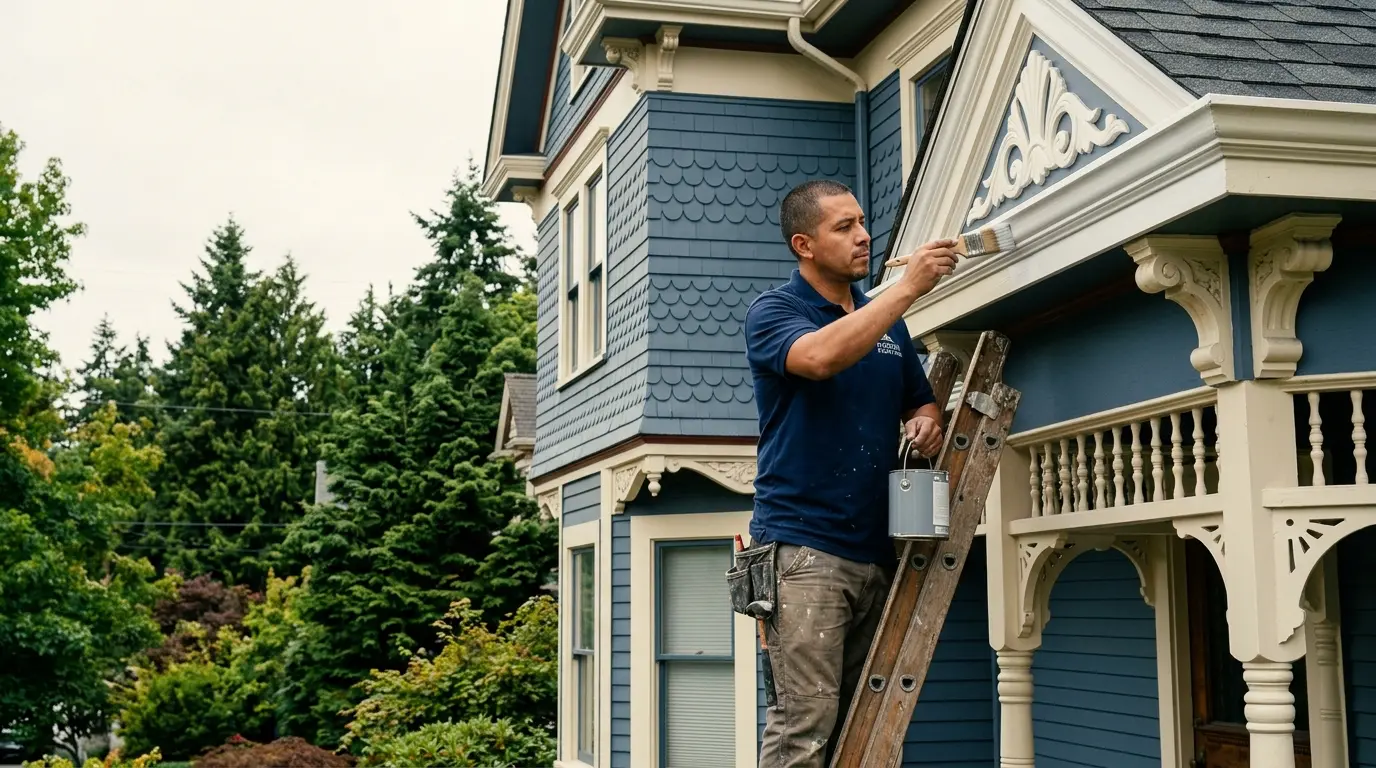
For professional painting in Seattle — whether it's a 1905 Victorian on Capitol Hill with fishscale shingles and corbeled cornices, a 1920s Craftsman bungalow in Ballard with original fir trim, a Queen Anne painted lady that needs five colors and a ladder on every elevation, or a modern West Seattle townhome with fiber cement siding — Pizoni Painting Company brings the right primer for the right substrate and the experience to know the difference. I'm Antonio Pizoni, the owner. I've been painting Seattle homes since 2012, I hold a Washington State contractor license, and I'm EPA RRP certified — a legal requirement for paint disturbance in the pre-1978 homes that make up the majority of housing stock in Capitol Hill, Ballard, Wallingford, Fremont, Queen Anne, and Rainier Valley. Interior painting starts at $350 per room. Call (425) 287-3619 for a free written estimate at your Seattle property.
Painting Seattle Homes — Why the City's Housing Stock Demands Specific Expertise
Seattle's residential neighborhoods have three distinct eras of housing, and each one requires a different approach to painting — not because of style, but because of materials and what those materials do in a marine climate with 150+ rainy days a year.
In fall 2023 I was called out to a 1924 Craftsman bungalow on NW 57th St in Ballard. The owners, the Lindqvist family, had noticed significant peeling on the north-facing cedar siding — the south side looked fine, the north side was peeling in sheets. When I stripped back the problem areas, it was immediately clear what had happened: the previous paint job, done about six years before, had put latex primer directly on bare cedar. On a south-facing wall with direct sun, that sometimes holds for a while. On a north-facing wall in Ballard that gets no drying sun and collects moisture from October through May, the cedar tannins wick through a latex primer film within one or two wet seasons, and the bond fails from the substrate up.
I stripped the north face back to bare wood, applied oil-alkyd primer in two coats with 24-hour cure time between, then finished with Sherwin-Williams Emerald Exterior in a mold-resistant formula. I also treated the north-facing soffit and fascia the same way, because those were the next areas to fail. Four coats total on the problem areas, six days on-site for the full exterior. Two years later the Lindqvists sent a photo — the north face looks exactly as it did when I left.
That project is a good summary of what separates professional painting from a coat of paint: knowing that cedar on a north-facing wall in the Pacific Northwest is a different substrate problem than cedar on a south wall, and choosing the primer accordingly before you ever roll a topcoat.
Pizoni Painting — Credentials
- ✓ WA State Contractor License (L&I)
- ✓ EPA RRP Certified — lead-safe protocol
- ✓ Victorian & Craftsman specialist
- ✓ General liability insurance
- ✓ Workers compensation coverage
- ✓ Written scope on every job
- ✓ Sherwin-Williams Pro Account
- ✓ Serving Seattle since 2012
Seattle Marine Climate — What It Does to Paint
Seattle averages 150+ rainy days per year. North-facing walls dry slowly, accumulate moss and algae, and fail faster than south-facing surfaces. Oil-alkyd primer on cedar is not optional — it's the only way to seal tannins against wicking moisture. Mold-resistant additives in topcoats extend repaint cycles from 5 years to 8–10 years on north exposures.
Professional Painting Services in Seattle
Exterior Painting — Victorian, Craftsman & Modern
Seattle exterior painting divides into three housing categories, each with its own primer system:
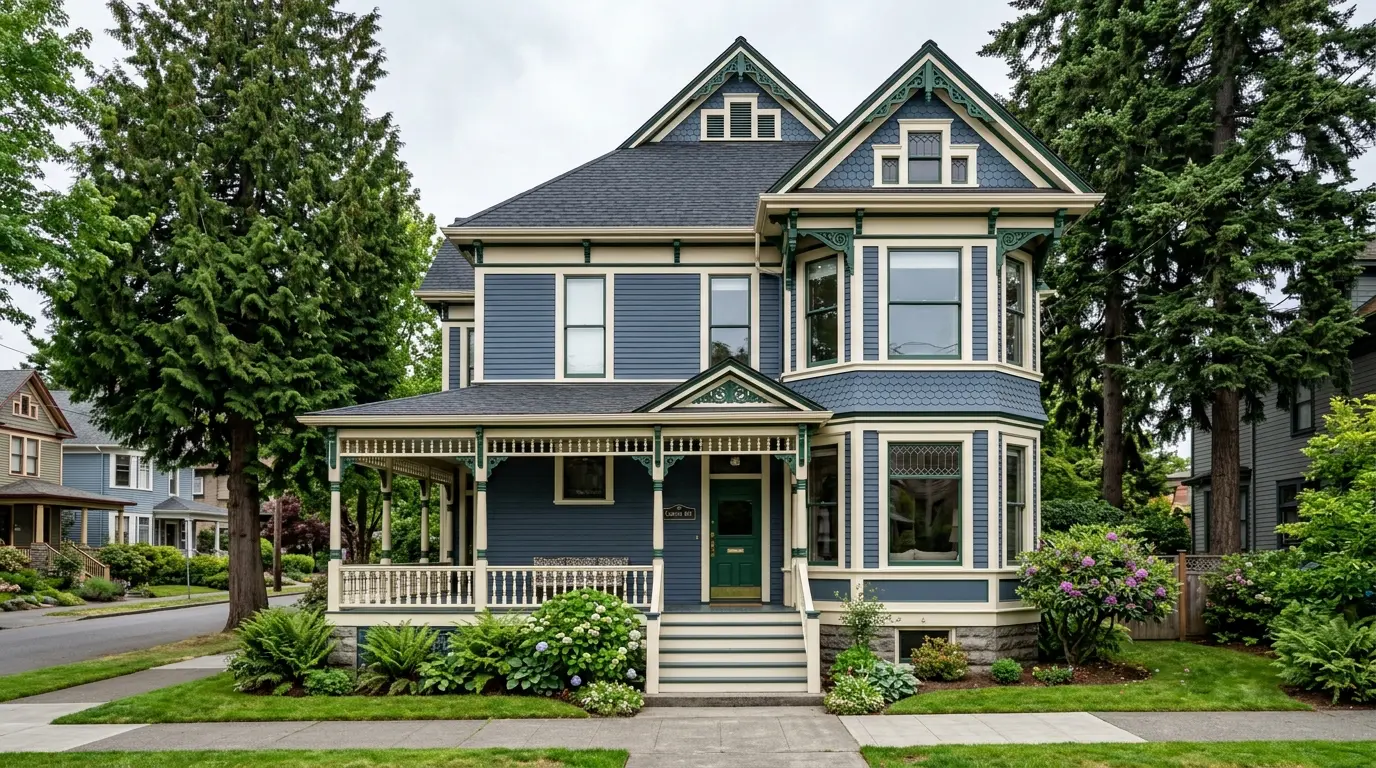
Pre-1940 homes — old-growth cedar and fir, often with lead paint present. Capitol Hill, Queen Anne, Ballard, Wallingford, and Fremont are dense with these. Lead test every surface before disturbance. Oil-alkyd primer on any bare cedar, BIN shellac on knots and resin pockets. Multi-color Victorian schemes require careful masking and sequencing — corbels, frieze boards, and window surrounds are typically the last surfaces painted and the first ones inspected by neighbors.
1940s–1970s homes — mix of cedar, asbestos-cement, and early aluminum. West Seattle, Rainier Valley, and Seward Park have a lot of this era. Lead testing on trim and windows is standard. Asbestos-cement siding (Colorlok, Hardite) requires specific handling — do not sand or power-wash aggressively.
Post-1980 homes and condos — fiber cement (James Hardie, CertainTeed), engineered wood, stucco. Requires 100% acrylic primer — never alkyd on fiber cement. Common in South Lake Union, First Hill condos, and newer West Seattle townhomes.
See full gallery and details: exterior painting in Seattle.
Interior Painting
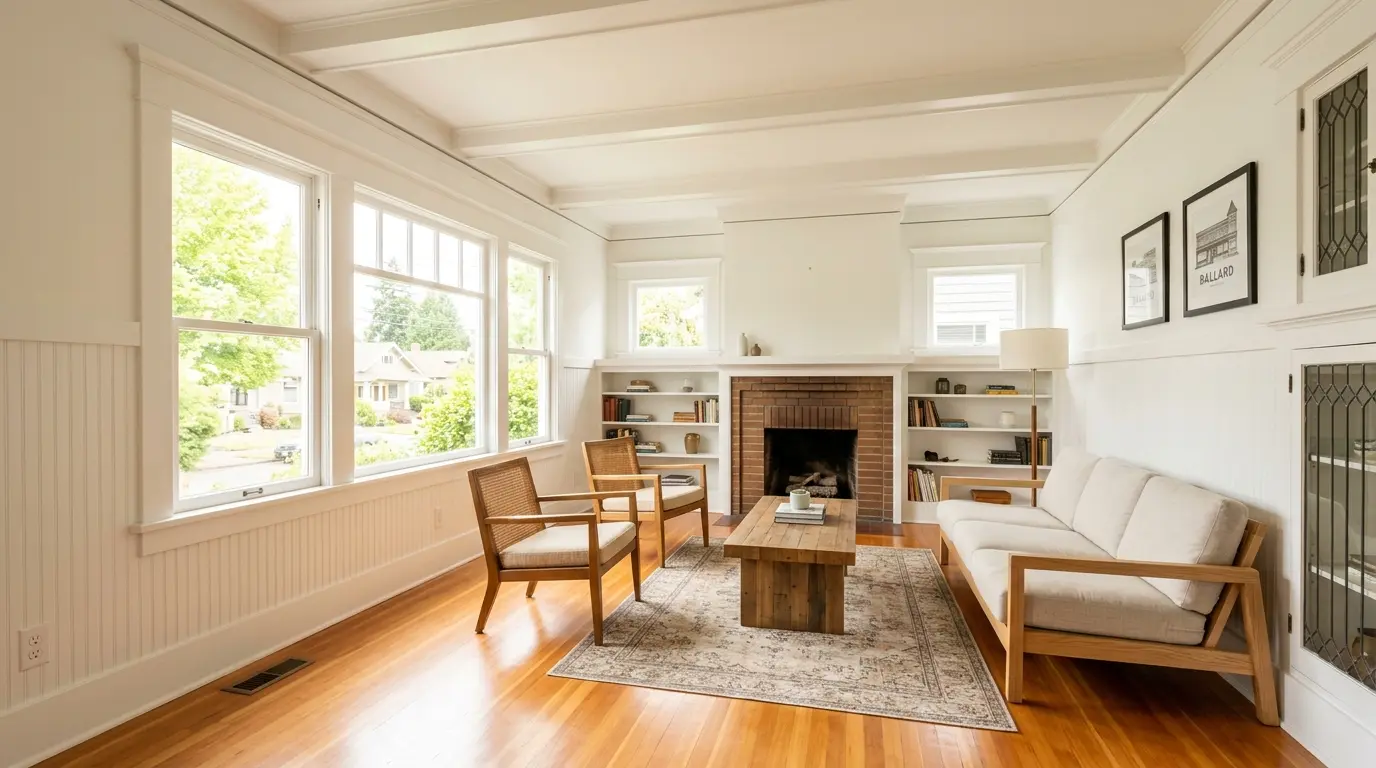
In spring 2024, the Nakamura family called me about their 1910s Queen Anne home on W Roy St, up near the top of Queen Anne Hill. They were preparing to sell — their realtor had told them the interior needed to go neutral. The problem: the previous owners had done a dark red in the dining room, a moody forest green in the library, and a deep navy in the upstairs hallway. Covering dark saturated colors with light neutrals is one of the more technically demanding interior scenarios.
I applied Sherwin-Williams Extreme Block to every dark wall — two coats, sanded lightly between. Without that high-hide primer, you'd be chasing color bleed through four or five topcoats of the finish coat. After priming I rolled BM Aura in Chantilly Lace OC-65 throughout — walls, ceilings, all trim in SW Emerald Urethane extra white. The Nakamuras had professional photos done the day after I finished. The house went under contract in six days.
For Seattle interiors without extreme color changes, my standard is BM Aura or SW Duration for walls, SW Emerald Urethane for all trim and doors.
Also see: interior painting in Seattle and room painting in Seattle.
Cabinet Painting
Seattle kitchens from the 1990s — especially in West Seattle, Beacon Hill, and Columbia City — frequently have oak or maple cabinets that are structurally sound but visually dated. Oak grain filling is the step that separates a professional cabinet paint job from a mediocre one. Skip the grain filler and the wood texture telegraphs through every coat; the cabinet looks hand-painted, not factory-finished.
My process: remove all doors and drawers, number each piece. Apply Aqua Coat grain filler on all oak surfaces — two coats, sanded to 220 grit between. Prime with BM Fresh Start 100% Acrylic. Spray all doors and drawer fronts with Benjamin Moore Advance through a 1.5mm HVLP tip in three coats. Box interiors and face frames get brush and roller. Rehang and adjust. The result is factory-level smoothness — no brush marks, no grain showing through, no orange peel when the spray pressure is set correctly.
Full pricing and details: kitchen cabinet painting in Seattle.
Drywall Repair & EPA RRP Lead-Safe Work
Seattle's older neighborhoods — Capitol Hill, Belltown, Rainier Valley, Central District — have significant plaster wall construction. Plaster repair requires a bonding agent applied first, then patching in multiple thin coats rather than one heavy fill. Texture matching on old plaster is done by hand — there is no template for the way a 1910 Queen Anne's walls look up close, and reproducing that texture is one of the harder skills in interior work.
On the lead side: I keep calibrated XRF swab test kits on every exterior estimate call for pre-1978 Seattle homes. Positive test triggers full EPA RRP protocol — 10-foot containment sheeting on all sides, wet-scrape only, HEPA vacuum before containment removal, documented waste disposal to a licensed facility. I carry the documentation on-site throughout every qualifying job. This matters at resale: King County inspectors and real estate attorneys increasingly ask for lead-safe documentation on pre-1978 homes.
See also: painting contractors in Seattle for Victorian and historic home specialty work.
Professional Painter Prices in Seattle, WA (2026)
Interior Painting
| Scope | Price Range |
|---|---|
| Single room, walls only | $350–$620 |
| Single room, walls + ceiling + trim | $620–$1,000 |
| Full home, 1,200–1,600 sq ft | $4,500–$6,800 |
| Full home, 1,800–2,600 sq ft | $6,800–$9,500 |
| Dark-to-light color change (Extreme Block) | +$300–$650 |
| Color consultation (credited to job) | $95 |
Exterior Painting
| Home Type / Size | Price Range |
|---|---|
| Ranch / rambler, 1,000–1,400 sq ft | $4,500–$6,500 |
| Two-story, 1,600–2,200 sq ft | $6,500–$10,000 |
| Victorian / Craftsman (multi-color) | $10,000–$18,000 |
| Condo / townhome exterior | $3,500–$7,000 |
| EPA RRP surcharge (pre-1978 lead) | +$400–$900 |
Cabinet Painting
| Kitchen Size | Price Range |
|---|---|
| Small kitchen, up to 20 doors/drawers | $2,400–$3,400 |
| Medium kitchen, 21–35 doors/drawers | $3,400–$5,200 |
| Large kitchen, 36+ doors/drawers | $5,200–$7,500 |
Drywall & Plaster Repair
| Repair Type | Price Range |
|---|---|
| Small holes, nail pops (<4") | $150–$380 |
| Medium patch (4"–12") | $380–$700 |
| Plaster repair + texture match | $650–$1,700 |
| Water damage cut-back + BIN seal + paint | $900–$2,500 |
"The north-facing siding on our Ballard bungalow had been peeling for two years — the previous painter had used latex primer on the bare cedar and it never had a chance. Antonio explained the oil-alkyd primer requirement before he started, which no one had ever done. Two years later it still looks exactly the way he left it. The south side looks the same as it did the day it was done."
— Lindqvist family, NW 57th St, Ballard Seattle (2023 — exterior repaint, cedar siding, north exposure)"We had four dark rooms that had to become light neutrals before the listing photos. Antonio showed us the Extreme Block primer setup and explained why it mattered — that without it we'd need five topcoats and still might not cover fully. The transformation was complete in three days. Our realtor said the interior photos looked like a different house. We went under contract in six days."
— Nakamura family, W Roy St, Queen Anne Seattle (2024 — pre-listing interior, dark-to-light, four rooms)"Our Capitol Hill Victorian needed EPA lead documentation for the insurance company — not just 'we'll be careful,' but actual certification and written protocol. Antonio had everything: test swabs on-site, containment setup photos, HEPA documentation, waste disposal receipts. The painting itself was excellent too, but having the paperwork in order was the thing we actually needed. Worth every dollar."
— Osei family, 15th Ave E, Capitol Hill Seattle (2023 — exterior repaint, EPA RRP certified, 1905 Victorian)"The oak cabinets in our West Seattle house had been there since 1997 and the grain showed through every paint job we'd seen on similar kitchens. Antonio explained the grain filler step and why other painters skip it. After the job, the cabinets looked factory-finished — you can't see the grain at all. Our guests consistently ask if we replaced the cabinets entirely."
— Ferreira family, Fauntleroy area, West Seattle (2024 — oak cabinet painting, grain fill + BM Advance spray)Seattle Neighborhoods We Serve
Capitol Hill & First Hill
Seattle's densest concentration of Victorian and Edwardian homes — 1890s through 1920s construction on 15th Ave E, 12th Ave, and surrounding blocks. Virtually all pre-1978, most pre-1940. Lead testing mandatory. Multi-color exterior schemes with corbels, dentil molding, fishscale shingles. Old-growth fir and cedar trim throughout. This is some of the most technically demanding exterior painting work in King County.
Ballard & Wallingford
Craftsman bungalows from 1905–1935 on NW 57th, NW Market St corridor, and the Wallingford grid. Old-growth cedar siding and fir trim — oil-alkyd primer is the only correct system on bare cedar. North-facing walls collect moss and moisture faster than any other exposure in Seattle. Newer infill condos and townhomes in Ballard use fiber cement — completely different primer system.
Queen Anne & Magnolia
Queen Anne Hill has some of Seattle's best-preserved Victorian painted ladies — large homes on W Roy, W Blaine, and Kerry Ave with three to five exterior color schemes. High hillside exposure means strong wind loads on west-facing surfaces. Magnolia has more 1940s–1960s ranch homes along Magnolia Blvd. Both neighborhoods have a mix of pre-1978 and newer construction.
West Seattle & Rainier Valley
West Seattle — Fauntleroy, Admiral, Alki — has a wide range from 1940s cottages to modern townhomes. Rainier Valley and Columbia City feature 1940s–1960s ranchers, many with their first or second exterior repaint. More affordable area of Seattle with a mix of wood siding and fiber cement. Interior pre-listing repaints are common throughout both neighborhoods ahead of sale.
Paint Products and Technique — What Seattle's Climate Demands
The single most consequential product decision on a Seattle exterior paint job is the primer on cedar siding. Cedar — which is the siding material on essentially every pre-1960 Seattle home — contains tannins and resins that actively fight latex adhesion when the wood is bare or compromised. In Seattle's climate, that fight is accelerated by the moisture cycling: wet season after wet season, the latex film softens slightly, the tannins wick through, and eventually the paint separates from the substrate rather than wearing from the surface down.
The correct solution has been the same since before latex paint existed: oil-alkyd primer, applied to dry bare wood, with a full 24-hour cure before any topcoat. This seals the tannins and creates a stable substrate that latex topcoats can bond to. It is not faster or cheaper than latex primer — it takes longer to apply and requires a day's cure time. It simply works in a way that latex primer on bare cedar does not.
For the topcoat on Seattle exteriors, I use Sherwin-Williams Emerald Exterior or Benjamin Moore Aura Exterior as my standard. Both have mold and mildew inhibitors built into the formula — relevant on north-facing Seattle walls. Both expand and contract well through Pacific Northwest temperature swings. Both maintain color longer than standard latex. The difference between them is mostly finish — SW Emerald reads slightly softer, BM Aura has a slightly richer depth, particularly on deep colors.
On plaster interiors — common in pre-1940 Capitol Hill and Queen Anne homes — the primer choice is different. Fresh or recently patched plaster is alkaline, which can cause a saponification reaction (paint turns to soap) under certain latex topcoats. I use a masonry conditioner or shellac primer on new plaster patches before any latex goes over them.
Standard Product List — Seattle
- Cedar / old-growth fir exterior primer: Oil-alkyd (mandatory on bare wood)
- Fiber cement / engineered wood primer: 100% acrylic
- Bare knots, resin, water stains: Zinsser BIN shellac
- Dark-to-light color change: SW Extreme Block (2 coats)
- Exterior topcoat: SW Emerald Exterior or BM Aura Exterior
- Interior walls: BM Aura or SW Duration
- Interior trim: SW Emerald Urethane
- Cabinet spray: BM Advance (waterborne alkyd)
- Oak grain filler: Aqua Coat (2 coats, sanded 220 grit between)
EPA RRP in Seattle — What It Covers
Pre-1978 homes in Capitol Hill, Ballard, Queen Anne, Fremont, Wallingford, Central District, and Rainier Valley all require EPA RRP protocol for any paint disturbance. This means: plastic containment sheeting 10 feet out on all sides, wet-scrape only (no dry sanding), HEPA vacuum closeout, and documented waste disposal. I carry full RRP documentation on every qualifying Seattle job. This is a legal requirement under 40 CFR Part 745 — not a recommendation.
We also serve nearby cities — painting contractors Seattle, painting contractors Bellevue, painting contractors Kirkland, and our full painting services.
Frequently Asked Questions — Professional Painters Seattle WA
Who are the best professional painters in Seattle WA?
Pizoni Painting Company, owned by Antonio Pizoni, is one of the top professional painting services in Seattle. With 15+ years of experience in the Seattle market — Capitol Hill Victorians, Ballard and Wallingford Craftsman bungalows, Queen Anne painted ladies, West Seattle split-levels — plus a Washington State contractor license and EPA RRP certification for lead-safe work, the company handles the full range of Seattle housing stock. Interior painting starts at $350 per room. Free estimates at (425) 287-3619.
How much do professional painters charge in Seattle WA in 2026?
Interior painting in Seattle runs $350–$620 per room for walls only, or $4,500–$9,500 for a full home. Exterior painting on standard homes starts at $4,500; Victorian and Craftsman homes with multi-color schemes and intricate trim run $10,000–$18,000. Pre-1978 homes with lead paint add $400–$900 for EPA RRP containment compliance. Cabinet painting starts at $2,400. All prices include paint, prep, and cleanup. No deposit required to schedule an estimate.
Do professional painters in Seattle need EPA RRP certification?
Yes — federal law requires it for paint disturbance in any home built before 1978. Seattle has one of the highest concentrations of pre-1978 housing in the Pacific Northwest. Capitol Hill, Queen Anne, Ballard, Wallingford, Fremont, and the Central District all have substantial pre-1940 housing stock where lead paint is nearly universal. I am EPA RRP certified and provide written lead-safe protocol documentation on every qualifying Seattle job.
What paint lasts longest on Seattle exterior homes?
On cedar siding — which is the primary siding material on pre-1960 Seattle homes — oil-alkyd primer under a 100% acrylic topcoat is the only system that lasts. Latex primer on bare cedar fails within one to three wet seasons in the Pacific Northwest. The topcoat needs mold-inhibitor additives for north-facing walls. SW Emerald Exterior and BM Aura Exterior are the two products I use most in Seattle — both have mold inhibitors built in and both hold through Seattle's temperature range without excessive expansion cracking.
How long does it take to paint a house in Seattle?
A single room interior takes one day. A 1,500–2,000 sq ft Seattle home interior with walls, ceilings, and trim takes 3–4 days with a two-person crew. Exterior painting on a standard two-story Seattle home takes 6–8 days, weather permitting. A Victorian or Craftsman with multiple colors and intricate trim — Capitol Hill or Queen Anne style — takes 10–16 days. The prep work on a pre-1940 Seattle home: lead containment setup, oil-alkyd primer cure time, careful masking of decorative millwork — is where most of the days go, and where cutting corners produces paint that fails in 4 years instead of 12.
